ODIN:VALHALLA RISING
- 3.7
- Rating
- 1.00M
- Installs
- Free
- Price
 Analysis by App-foxy
ODIN:VALHALLA RISING is the kind of role-playing game that immediately asks for attention. I spent time with it as a large-scale MMORPG rather than a quick mobile distraction, and my first impression was of a game built around atmosphere, exploration, and a persistent Norse-inspired world. It is free to start, developed by Kakao Games Corp., and aimed at Teen players. The central appeal is easy to understand: you create a character, move through a broad fantasy setting, fight through quests, and gradually build your own place in a world that is meant to feel shared rather than isolated.
That ambition also shapes the accessibility experience. The game can be visually impressive and rewarding when I have time to settle in, but its scale, combat pace, menus, and online structure can make it demanding in short or interrupted sessions. I would recommend it most strongly to players who enjoy long-form mobile MMORPGs and do not mind learning several systems at once. If you need a very calm interface, highly flexible controls, or a game that works equally well in tiny bursts, you should approach it more carefully.
How clearly the world and interface communicate
I look at how clearly the Norse world and its interface guide attention, because that shapes whether exploration feels inviting or overwhelming. I also consider a practical habit that can make busy screens easier to read: separating travel, combat, and menu decisions instead of trying to handle them all at once.
You May Also Like

 Blood Strike: 2.5 Anniversary
Blood Strike’s Loadouts Turn Every Drop Into a Tactical Gamble
A close look at Blood Strike’s custom loadouts: how fast access to signature weapons reshapes its battle royale rhythm, rewards preparation, and narrows the gap between fights.

 Pandora - Music & Podcasts
Pandora’s Music Is Easy to Start, but Harder to Recover
Pandora’s strength is its low-effort path from a seed to a station. Its weak spot is how much confidence it asks you to place in connection, setup, and quiet recovery.

 8 Ball Pool
 Is Built on Rivalries, Rematches, and Routine
A close look at the rivalries, rematches, shared routines, and unanswered safety questions that turn a quick pool match into a persistent mobile community.

 Samsung Music
’s Quiet Strength Is Playing What You Already Own
Its reach comes less from spectacle than from dependable access to a personal library. That simplicity is both the app’s strongest retention engine and its ceiling.

 AccuWeather: Weather Radar
AccuWeather Review: A Quick, Clear Forecast for Everyday Decisions
For everyday plans, the best forecast is the one you can understand quickly. AccuWeather makes rain timing, radar, and local conditions easy to act on, with a few trade-offs.

 Hill Climb Racing
Why Hill Climb Racing Still Turns Crashes Into One More Run
A tiny car, a bumpy hill and one more upgrade: Hill Climb Racing keeps resurfacing because its simple chaos makes every near-miss feel personal.
More From Our News Desk



Readable presentation with a busy mobile layout
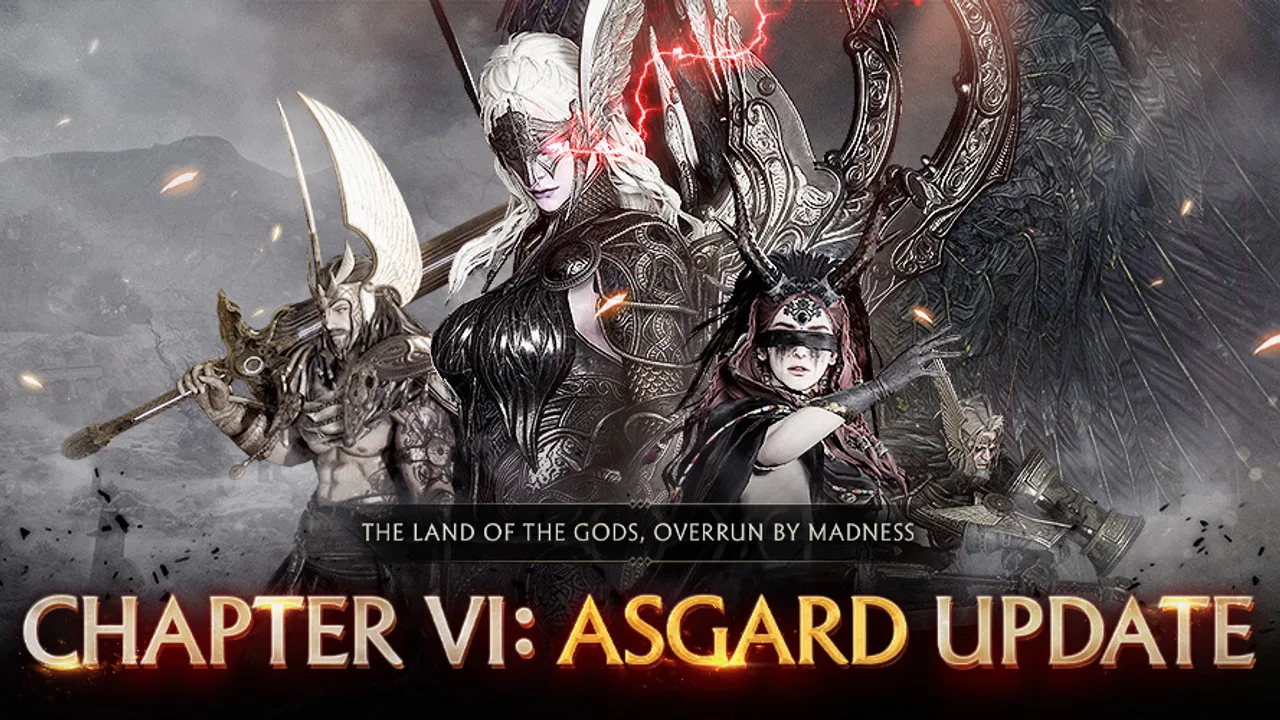
The strongest part of the presentation is the sense of place. The Norse setting gives the environments a recognizable identity, and that helps me understand where I am even when the screen contains a lot of information. Landscapes, towns, enemies, and quest activity are presented as parts of one connected world instead of a sequence of unrelated stages. That visual consistency is useful for orientation, especially for players who remember locations better through scenery than through text.
The trade-off is density. MMORPG interfaces naturally place several pieces of information around the action, and ODIN:VALHALLA RISING expects me to watch the character, objectives, combat feedback, menus, and surrounding activity at the same time. On a larger phone or tablet, this is easier to manage. On a smaller display, labels and icons compete more strongly with the world itself. I found that I played more comfortably when I paused between activities to inspect menus instead of trying to understand everything during a fight.
The practical lesson is to treat the interface as something to learn gradually, not something to master in one sitting. Early on, I would focus on identifying the main quest route, character information, equipment area, and the controls needed for ordinary combat. Once those become familiar, the rest of the screen feels less intimidating. This approach is particularly helpful for players who find crowded interfaces tiring or who need extra time to process new symbols.
Navigation rewards patience
Exploration is one of the game’s clearest strengths, but navigation is not always effortless. A large open world gives me more freedom than a linear role-playing game, yet freedom also means more decisions. I need to understand where a quest is taking me, what activity deserves attention, and whether I am following the main path or drifting into optional content. Players who enjoy discovering systems organically may like this. Players who prefer a simple “one objective, one destination” structure may feel overloaded.
I found it useful to read the objective before moving rather than relying only on automatic guidance or visual prompts. That small habit makes the journey feel more intentional and helps when the game presents several possible activities. It also reduces the chance of reaching a location without understanding why I am there. For anyone with attention-related difficulties, breaking the session into one task at a time is more manageable than treating the whole world as a checklist.
The game’s current version is 1.10.4, so the interface may continue to change as the developer adjusts the experience. That is normal for a live MMORPG, but it means returning players may occasionally need to relearn where a function sits or how a system is presented. I would not choose this game if I wanted a completely static interface that never asks me to adapt.
Text, icons, and visual focus
Text-heavy RPGs can be difficult when the player has limited vision, reading fatigue, or simply a small phone. Here, the visual scale of the world is important, but the supporting information matters just as much. Quest wording, item details, combat indicators, and menus all contribute to decision-making. I recommend playing on the largest comfortable screen available and avoiding a bright, visually busy background when reading small interface elements.
I also prefer to stop moving before reading equipment or quest information. Trying to inspect details while the character is travelling or enemies are nearby creates unnecessary pressure. This is a simple workflow, but it changes the experience: the game becomes easier to follow when exploration, combat, and menu management are treated as separate moments rather than one continuous stream.
Controls and motor effort
Mobile MMORPGs ask for repeated touch input, and ODIN:VALHALLA RISING is not a passive story game. Movement, combat actions, target selection, menu taps, and character management all require physical interaction. For players with limited dexterity, tremors, joint pain, or fatigue, the important question is not only whether the controls can be learned, but whether they remain comfortable across a longer session.
I found that the game is easier to handle when I avoid unnecessary multitasking. Instead of moving, changing menus, and activating abilities at the same time, I prepare my character before entering a demanding encounter. I check equipment, understand the objective, and keep my attention on the few actions that matter immediately. This reduces frantic tapping and makes mistakes less likely.
That preparation reveals a meaningful trade-off. The game’s open-world MMORPG structure gives me more to do than a simple action RPG, but every extra layer adds input. Players who enjoy optimizing a character may see this as depth. Players who need low-effort interaction may experience it as work. A slower, turn-based role-playing game would be a better alternative for someone seeking deliberate decisions with less real-time motor pressure.
Visual and sensory load
The Norse fantasy presentation is a major part of the appeal, but a visually rich world can also be tiring. Combat, movement, environmental detail, and interface prompts may demand constant visual attention. I would be cautious about recommending it to someone who is sensitive to motion, flashing effects, or crowded screens without first testing a short session in a comfortable setting.
Sound can improve immersion, but I would not depend on audio alone to understand what is happening. Visual attention remains central to navigation and combat, so players who are deaf or hard of hearing can still approach the game through its visible information, while players who have low vision may find the reliance on small visual cues more challenging. In either case, the experience is likely to depend heavily on the phone, display size, brightness, and personal comfort rather than on the game alone.
A useful routine is to lower the session length before lowering the difficulty. If the screen begins to feel exhausting, a short break can help more than pushing through and making rushed decisions. This is especially relevant because the game encourages extended progression, while accessibility often depends on preserving energy and concentration from one activity to the next.
Playing in real-life situations
ODIN:VALHALLA RISING works best when I can give it uninterrupted attention, but real life rarely stays that tidy. A commute, a waiting room, or a short break at work may seem like a good time for a mobile MMORPG, yet the game’s online structure and layered progression make interruptions inconvenient. Losing focus during travel or combat can leave me unsure of what happened, and returning after a distraction may require checking objectives and menus again.
For a realistic everyday scenario, I would use it during a planned evening session at home rather than during a five-minute gap. I can settle the phone, read the current objective, complete a manageable activity, and stop at a natural point. If I only have a few minutes, I would use that time for simple character organization or a brief check of progress instead of beginning a complicated quest. This makes the game feel less stressful and protects the enjoyment of the world.
The free entry point helps with experimentation. I can install it without committing to a purchase and decide whether the interface, pace, and online demands suit me. At the same time, the game includes in-app purchases ranging from $3.99 to $149.99 per item. That price range matters for accessibility in a broader sense: players who need to manage spending should set a firm personal limit before becoming invested in progression. The game is not a good choice for anyone who feels pressured by optional purchases or prefers a single upfront price.
Where it differs from simpler alternatives
Compared with a single-player action RPG, this game offers a stronger sense of a continuing shared world, but it also brings more social and organizational complexity. A conventional offline RPG is usually easier to pause, easier to approach at your own pace, and less dependent on maintaining awareness of a living game environment. If privacy, quiet, or complete control over the session matters most, that alternative may suit you better.
Compared with a turn-based mobile RPG, ODIN:VALHALLA RISING places more emphasis on movement, timing, and visual tracking. Turn-based games are often kinder to players who need time between decisions or who find rapid touch input uncomfortable. On the other hand, they may not provide the same feeling of travelling through a continuous Norse world. The right choice depends on whether you value atmosphere and real-time presence more than low-pressure interaction.
Compared with a small, story-focused adventure, this game asks for a larger commitment. The reward is a broader sense of progression and discovery, but the cost is learning more systems and managing more information. I would choose it for a player who wants a hobby game, not for someone looking for a compact narrative that can be completed in a handful of relaxed sessions.
Who can get the most from it
The game is a strong match for players who enjoy fantasy exploration, character development, and the feeling that their actions belong to a larger online world. It is also appealing if you like returning to a character repeatedly and gradually learning how the setting, quests, equipment, and combat fit together. The average rating is 3.7 from around 43 thousand ratings, while the game has passed one million installs, suggesting a substantial audience but also a range of reactions rather than universal approval.
I would especially recommend trying it if you have a modern-feeling phone or tablet, a stable place to play, and enough patience to learn the interface over several sessions. The Teen content rating also makes it more suitable for older players than for young children, and families should consider that online role-playing games can involve extended play and optional spending.
I would tell some players to skip it. If you need large, uncomplicated controls; if you dislike persistent online worlds; if you want a game that pauses cleanly at any moment; or if visual and motor fatigue makes extended touch interaction difficult, the game may create more friction than enjoyment. A quieter offline RPG, a turn-based adventure, or a short puzzle game could be a more considerate choice for those needs.
My inclusive verdict
My overall view is positive but conditional. ODIN:VALHALLA RISING gives me a convincing reason to explore: its Norse world feels like a place to inhabit rather than a backdrop between battles. The free download makes it easy to test, and the role-playing structure offers enough room for players who enjoy building a long-term routine around one character. Kakao Games Corp. has clearly aimed for a substantial mobile MMORPG rather than a disposable time filler.
Its accessibility is less about a perfectly simplified interface and more about whether the player can create a comfortable way to approach the game. Larger screens, short planned sessions, deliberate menu reading, and preparation before combat make a real difference. Those strategies do not remove every barrier, especially for players with limited dexterity, low vision, sensory sensitivity, or little tolerance for online complexity, but they can make the experience more manageable.
I would recommend giving it a careful trial rather than assuming that an impressive open world will suit everyone. Start with a brief session, notice how your eyes, hands, and attention feel, and decide whether the game’s pace fits your routine before spending money. For players who want a rich Norse MMORPG and can make room for its demands, ODIN:VALHALLA RISING is worth exploring; for players who need simplicity and immediate accessibility, a smaller or turn-based alternative is likely the wiser choice.
FAQs for ODIN:VALHALLA RISING
01What is ODIN:VALHALLA RISING?
ODIN:VALHALLA RISING is a large-scale MMORPG inspired by Norse mythology. It lets you explore several connected realms, complete story quests, fight mythological creatures, and develop a customizable warrior. The game focuses on cinematic visuals, open-world exploration, character progression, equipment upgrades, and online interaction with other players through cooperative and competitive content.
02Is ODIN:VALHALLA RISING free to download and play?
ODIN:VALHALLA RISING can generally be downloaded and played for free, but it includes optional in-app purchases. These may provide premium currency, cosmetic items, convenience features, or progression-related resources. You can experience the main adventure without paying, although advancing efficiently or competing at higher levels may require patience, careful resource management, and an understanding of the game’s monetization system.
03What devices are compatible with ODIN:VALHALLA RISING?
Because ODIN:VALHALLA RISING uses detailed 3D environments, large battles, and demanding visual effects, it requires a relatively modern Android or iOS device. Compatibility and performance depend on the operating system, available storage, processor, graphics hardware, and memory. Before installing, check the current store listing and make sure you have enough free space for the initial download and additional game data.
04Does ODIN:VALHALLA RISING require an internet connection?
Yes, ODIN:VALHALLA RISING is designed as an online MMORPG and requires a stable internet connection for most of its features. Your connection is used for account access, server communication, quests, multiplayer activities, events, and character progression. Playing over Wi-Fi is recommended, especially when downloading updates or participating in busy areas where mobile data usage and connection stability can become important.
05What gameplay features does ODIN:VALHALLA RISING offer?
The game combines open-world exploration with questing, real-time combat, dungeon activities, equipment enhancement, mounts, guild systems, and large-scale player interaction. You can travel through mythological regions, battle enemies and bosses, collect rewards, and improve your character over time. Players who enjoy long-term progression should find plenty to do, although some systems may feel complex until you become familiar with them.
Pros
- Large open world with detailed Nordic-inspired environments.
- Cross-platform progression supports playing on mobile and PC.
- Several classes offer different combat styles and team roles.
- Guild activities and large-scale battles add strong social depth.
- High-quality visuals and cinematic presentation enhance exploration.
Cons
- Requires substantial storage space and a capable device for smooth performance.
- Combat can feel repetitive during extended grinding sessions.
- Many progression systems may overwhelm new players at first.
- Energy
- timers
- and upgrade materials can slow free progression.
- Frequent online connection is required
- even for routine activities.

ODIN:VALHALLA RISING
Gallery